

Quick answer
Monte Palace Madeira history begins in 1789 as Quinta do Prazer, an English consul's summer retreat above Funchal. The estate was rebuilt as the Monte Palace Hotel in 1897, operating until 1943, then lay abandoned for four decades. Portuguese entrepreneur José Berardo acquired the property in 1987 and opened it as the Monte Palace Tropical Garden in 1991, integrating his collection of minerals, tiles, and sculpture with botanical displays spanning five continents.
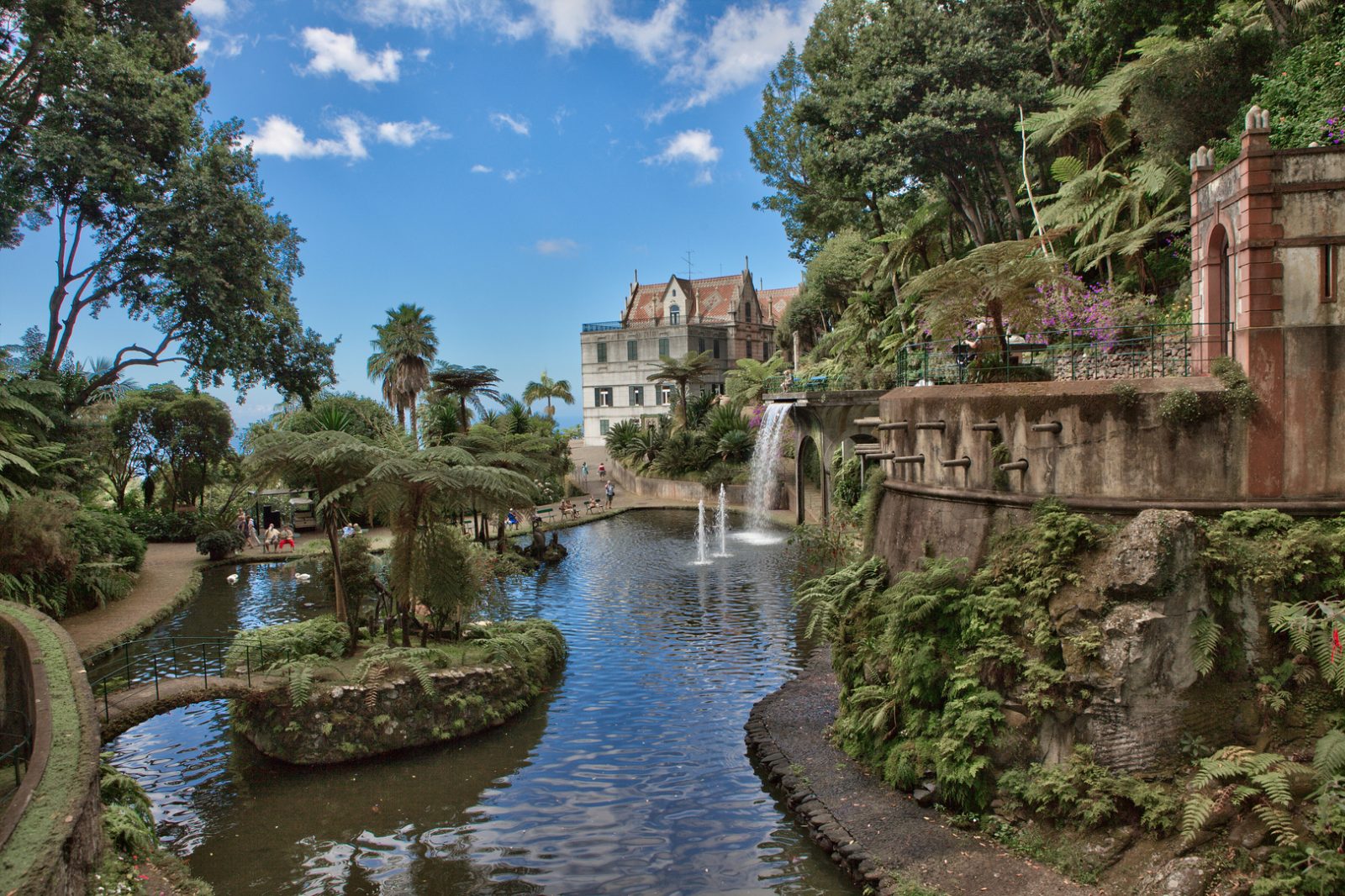
The land beneath Monte Palace has hosted three distinct lives. In 1789, English consul Charles Murray commissioned Quinta do Prazer as a hillside escape from Funchal's harbor heat. The original quinta followed the Anglo-Portuguese pattern of the era: modest stone residence, terraced vineyards, and fruit orchards climbing the volcanic slope. The estate's second incarnation arrived during Madeira's belle époque tourism boom. In 1897, the quinta was demolished and replaced with the Monte Palace Hotel, a five-story neo-romantic structure designed to house wealthy European convalescents seeking the island's mild climate. The hotel operated for 46 years, hosting British and German guests through two world wars, before closing in 1943. Wartime disruption and shifting tourist patterns left the building shuttered and decaying through the 1950s, 60s, and 70s. Portuguese businessman José Berardo purchased the abandoned property in 1987 with a singular vision: transform the ruined hotel into a platform for his private collections of minerals, azulejos, and African sculpture while creating botanical gardens that would represent global flora. The Berardo Foundation invested four years in structural restoration, landscape architecture, and specimen acquisition before opening the Monte Palace Tropical Garden to the public in June 1991. Today's garden preserves the hotel's central façade and grand staircase while the interior houses two museums: the Minerals Museum on the lower floor and the African Sculpture collection above. The surrounding 70,000 square meters layer Portuguese tile panels alongside koi ponds inspired by Japanese design, South African cycads beside Madeiran laurel groves, and Chinese pagodas overlooking views toward Funchal Bay. The estate's history remains visible in architectural fragments—original hotel balustrades, the consul's boundary walls, terraced foundations from the quinta era—threaded through pathways that descend 60 meters from upper pavilion to lower lake. The site operates as a private foundation rather than municipal park, which explains both the entrance conservation fee and the curatorial density. Berardo's approach embedded his personal collections into the landscape rather than segregating them in traditional gallery spaces, so visitors move between camellias and Ming dynasty ceramics, heather gardens and Zimbabwean stone sculptures, without clear boundaries between botanical and cultural exhibition. This layered model reflects monte palace madeira history itself: a property shaped by successive owners who each imposed their vision while leaving traces of what came before.
“The estate's history remains visible in architectural fragments threaded through pathways that descend 60 meters from upper pavilion to lower lake.”
The Centuries-Old Evolution of Monte Palace Madeira History
The estate now housing Monte Palace began in the late 18th century as the Quinta do Prazer, a summer retreat commissioned by the English consul Charles Murray. Built in 1797, the quinta served Funchal's diplomatic and merchant elite as a refuge from coastal heat, its terraced grounds planted with native laurel and European ornamentals. In 1897, the property was acquired by Alfredo Guilherme Rodrigues, who transformed the quinta into the Monte Palace Hotel, a Belle Époque resort attracting European aristocracy seeking Madeira's mild climate. The hotel operated until 1943, when wartime disruption and declining patronage forced its closure. The building fell into disrepair, its gardens overtaken by invasive species. In 1987, entrepreneur José Berardo purchased the abandoned estate and initiated a decade-long restoration. The Berardo Foundation reopened the site in 1991 as the Monte Palace Tropical Garden, integrating the original quinta architecture with new pavilions designed to house Berardo's collection of Zimbabwean stone sculpture and Ming-era porcelain. The foundation planted over 100,000 exotic species, including South African proteas, Japanese maples, and cycads from Oceania, organized into geographic zones that map botanical traditions from five continents. The monte palace madeira history is further enriched by the addition of 166 azulejo panels salvaged from Portuguese estates, installed along the garden's pathways between 1998 and 2001. Today, visitors walk the same terraces that framed the 1797 quinta, now bordered by koi ponds fed by levada channels dating to the estate's agricultural past. The original Murray residence, visible from the upper lake, retains its neoclassical façade, while the Belle Époque hotel wing houses the Berardo Foundation's mineral collection. The timeline of this Madeiran estate unfolds in its layered garden beds, where 18th-century stone retaining walls support 20th-century plantings, preserving two centuries of horticultural ambition.
Charles Murray commissions the Quinta do Prazer as a summer estate above Funchal.
Alfredo Guilherme Rodrigues acquires the quinta and opens the Monte Palace Hotel.
The hotel closes amid wartime decline and the estate enters decades of abandonment.
José Berardo purchases the derelict property and begins comprehensive restoration.
The Berardo Foundation inaugurates the Monte Palace Tropical Garden, introducing sculptural and botanical collections.
166 Portuguese azulejo panels are installed along garden pathways, documenting regional craftsmanship.
Opening Hours for Visiting the Site of Monte Palace Madeira History
The Monte Palace Tropical Garden is open daily to visitors throughout the week, maintaining consistent operating hours.
| Monday | 09:00–19:00 | |
|---|---|---|
| Tuesday | 09:00–19:00 | |
| Wednesday | 09:00–19:00 | |
| Thursday | 09:00–19:00 | |
| Friday | 09:00–19:00 | |
| Saturday | 09:00–19:00 | |
| Sunday | 09:00–19:00 |
Arrival Routes and Accessibility to Monte Palace Madeira History
The Monte Palace Tropical Garden is located at Caminho das Babosas n4-A in Funchal. Visitors typically approach via the Funchal-Monte Cable Car, bus, or taxi to reach the high-altitude site.
Teleférico do Funchal from Funchal Old Town to Monte
Horários do Funchal lines 20, 21, or 22 from Funchal city center
Direct from Funchal center to Caminho das Babosas
Check availability
Frequently Asked Questions About Monte Palace Madeira History
Everything you need to know about monte palace madeira history